

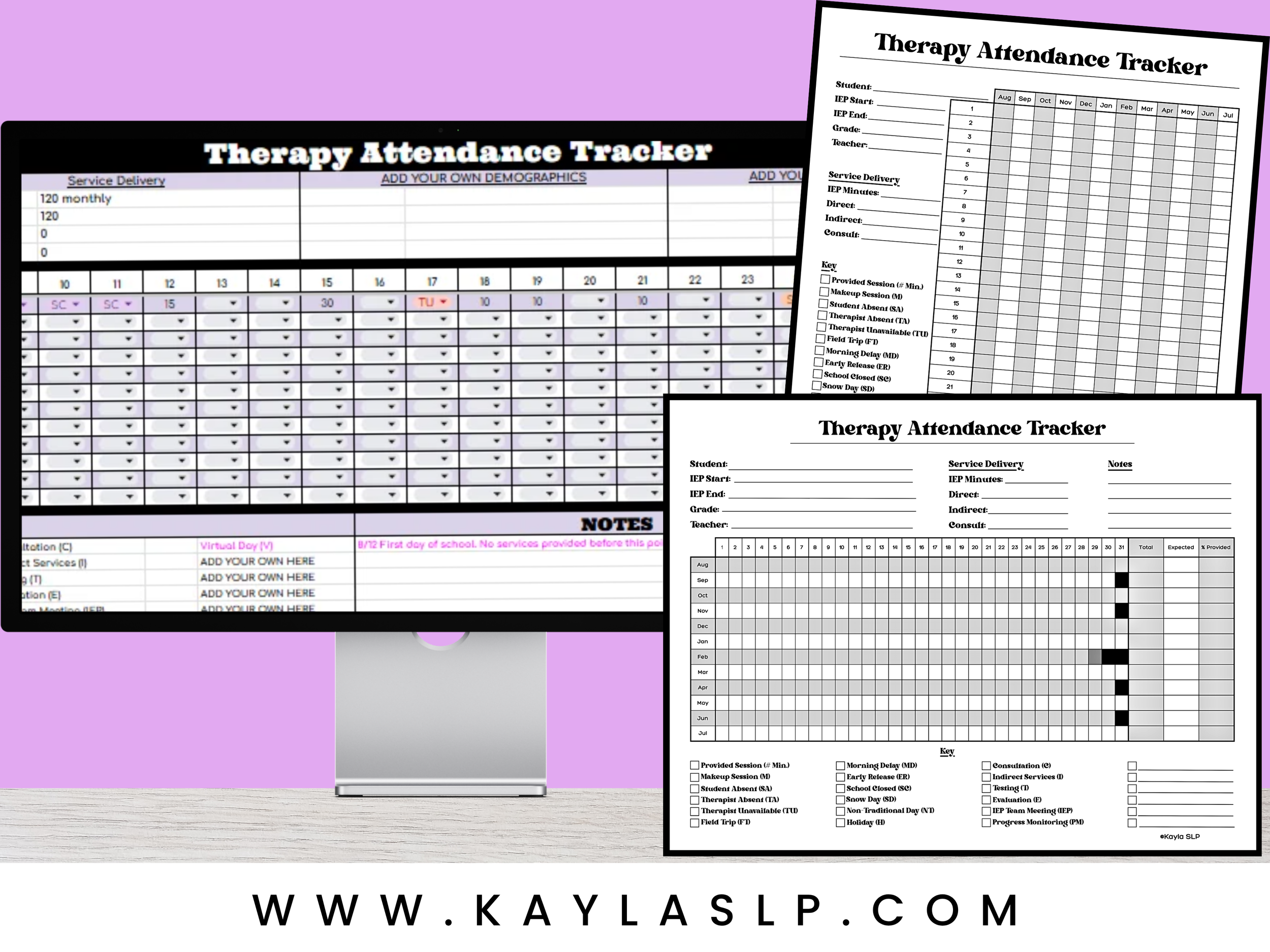
Tracking Attendance and Service Minutes for School SLPs
Tracking speech therapy service minutes doesn't have to be complicated! Learn how this simple attendance tracker helps school SLPs document services, track makeups, and stay organized for IEP and Medicaid compliance.

How I Progress Monitor in a 5-Minute Speech Model
“How can you take data in just five minutes?” It's a legit concern—and one this blog answers with real-world clarity. You’ll learn how to seamlessly build progress monitoring into quick articulation sessions, which tools help (and which paper backups to keep), and how to use that data to adjust your therapy when needed. Whether you're using an app or a binder, this post will show you how simple, consistent data collection is not only possible—it’s powerful.

Which Students Actually Benefit from 5-Minute Speech?
Not all students are a great fit for 5-minute speech therapy—and that’s totally okay. This blog shares honest, experience-based guidance from over five years in the field, breaking down which students typically succeed with short sessions and which ones may need a more traditional therapy model. You'll learn key decision-making questions, red flags to watch for, and tips for making the most of this powerful model when it fits just right. If you're a parent, teacher, or school leader looking to better support speech goals, this one's a must-read.

How I Explain 5-Minute Speech to Teachers and Admin
When you tell someone you’re doing “5-minute speech therapy,” you can almost see the confusion in their eyes—Is that even real therapy? This blog helps you tackle that head-on. Learn how to explain what the 5-minute model is (and isn’t), how to present it with confidence, and what kind of data and analogies turn skeptics into believers. Whether you’re an SLP introducing the model to your school team or an educator curious about how it works, this post lays out the evidence and mindset behind one of the most efficient service models out there.

Can You Really Make Speech Progress in 5 Minutes?
Let’s be honest—5-minute speech therapy sounds dreamy until it’s time to make a schedule that actually works. In this blog, you’ll learn exactly how to build a manageable routine using hallway-based planning, dedicated time blocks, and minimal teacher coordination. With real-world tips and a flexible mindset, you’ll discover how to serve more students efficiently—without feeling like you’re sprinting between classrooms. Perfect for new and seasoned SLPs who want to simplify without sacrificing quality.

What I Learned After 5+ Years of Using the 5-Minute Speech Model
Tired of drowning in group sessions and overloaded schedules? 5-minute speech therapy might be your secret weapon. This post shares a veteran SLP’s experience using the model for over five years—including what types of students benefit, how to handle pushback, and the simple tools that make it sustainable. You’ll walk away with realistic scheduling strategies, app and resource recommendations, and real-life examples of student success. Perfect for SLPs who are curious, skeptical, or ready to make their caseloads more manageable.

How I Schedule 5-Minute Speech Without Losing My Mind
Let’s be real—5-minute speech therapy sounds great… until you try to actually schedule it. This blog walks through exactly how to make it work without turning your week into a chaotic mess. Learn how to group by hallway (not grade), block out realistic time, skip the over-coordination, and start small without stress. If you’re a school SLP looking to streamline your day and boost student outcomes, these scheduling hacks will save your sanity.

5-Minute Speech vs. Traditional Groups: Can You Mix Both?
You don’t have to choose between 5-minute speech therapy and traditional groups—turns out, you can use both. This blog breaks down when each model makes sense, how to manage scheduling without overwhelm, and what happens when you shift students between approaches. Whether you're new to the 5-minute model or just trying to make your schedule work, this guide offers flexible, realistic strategies that help more students meet their goals—without adding to your stress.

What I Keep in My 5-Minute Speech Kit
Wondering what you actually need to carry for 5-minute speech? After years of trial and error, I’ve found the essentials that keep me efficient and prepared without hauling my entire therapy room. Here's what’s in my tote (or cart), and what I’ve stopped bringing for good.
5 Ways I Reset My Speech Room in January
January doesn’t have to mean a full therapy room overhaul. If you're feeling the urge to start fresh but also kinda exhausted, here are five small, practical things I do to reset my speech space after winter break. No trendy bins, no aesthetic bulletin boards—just real-life tweaks that make a difference when you’re back in the post-holiday chaos.

Christmas Speech Therapy Articulation Activity Using Toy Catalogs
Need a fun and effective holiday-themed speech activity that won’t take hours to prep? This blog shares a go-to Christmas articulation activity using free toy catalogs. Students search, describe, and say target words aloud based on their goals—all while staying highly engaged. With built-in flexibility and minimal materials, it’s a perfect December speech therapy idea for busy SLPs who want meaningful sessions with a holiday twist.

Targeting Narrative Language with Spooky Stories
Looking for an engaging way to target narrative language this October? Spooky stories are packed with opportunities for sequencing, perspective-taking, emotional vocabulary, and story grammar without losing your students' interest.

Helping Relatives Understand Your Child’s Communication Needs
Holidays can be overwhelming for kids with communication differences, and for their families too. Learn how to prepare relatives to support your child’s communication with confidence, kindness, and ease this season.

Thanksgiving Craft Ideas for Speech and Language
Looking for simple, no-prep Thanksgiving crafts that actually target speech and language goals? These hands-on ideas use materials you already have on hand and naturally build articulation, vocabulary, and sentence skills while keeping students engaged and connected.

Halloween Speech and Language Activities for October
October is full of speech-language potential—and these Halloween-themed activities make it fun and functional. Here’s a roundup of engaging, low-prep therapy ideas (with direct links!) to support communication goals in the most festive way possible.

Make Halloween Accessible with AAC Core Words for the Season
Halloween is full of communication moments—if we make space for them. Here’s how to support AAC users with core vocabulary, visual supports, and easy ideas to make this season more accessible, expressive, and fun for everyone.

SLP and OT: Fall Themed Therapy Ideas for Communication and Sensory Needs
Looking to combine sensory and speech therapy this fall? This post offers SLP + OT co-treatment ideas using pumpkins, leaves, sensory bins and movement, perfect for supporting communication and regulation in one engaging, themed session.

Language Targets for Pumpkin Patch Visits
Fall is full of speech opportunities, especially at the pumpkin patch! Learn how SLPs and caregivers can use seasonal outings to target vocabulary, concepts, sequencing, and social language, making the experience fun and communication-rich for every child.

Sensory‑Friendly Halloween Ideas for SLPs and Kids
Halloween can be challenging for kids with sensory or communication needs, but it doesn’t have to be. Discover SLP‑approved, sensory‑friendly Halloween tips that support inclusion, communication and joy during fall festivities.

Make Trick‑or‑Treating Inclusive for AAC Users
Halloween is full of communication opportunities, but it can also be challenging for AAC users. Learn how SLPs and caregivers can prep devices, plan ahead, and make trick-or-treating inclusive, fun, and empowering for every communicator this spooky season.